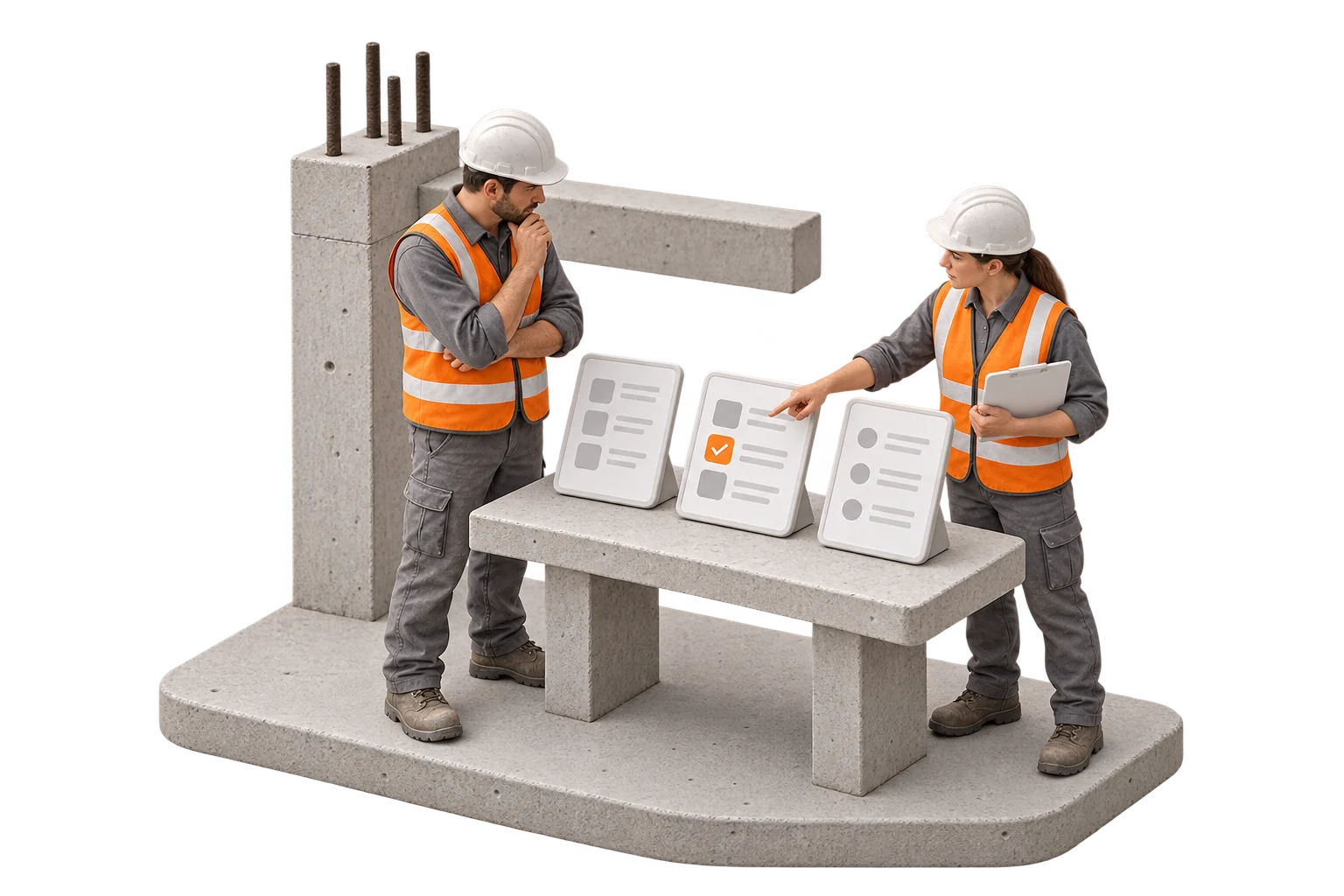
Seven steps for handing over and closing a site task
Set the scope, choose an owner and agree what the reviewer needs to see before closing a construction task.

People may leave the same conversation with different ideas about who is doing the work. Give the request a written scope, an owner and a way to verify the result.
Take a pre-installation check as an example. The area, drawing and acceptance criteria should travel with the job through each of these seven steps.
1. Describe the expected result
“Complete the pre-installation check on the second floor of Block B” gives the crew more to work with than “installation.” Specify the area and expected output. Split independent pieces of work into separate tasks.
The person doing the work may not have attended the conversation that prompted it. Include the relevant drawing or decision when you assign it.
2. Name the person responsible
Several teams may contribute. Choose one person to coordinate the work, list the other crews and ask the assignee to confirm the scope.
When a task changes hands, record the new owner and the reason for the handover. The next shift may never hear the conversation.
3. Set a priority you can explain
A task that blocks another trade or jeopardises a delivery needs to stand out. Give the reason in a sentence. A list where everything is urgent gives crews little guidance on what to do first.
In a safety emergency, use the site's established emergency communication and response procedures. A task record can document follow-up and closure.
4. Agree a realistic review or delivery date
Check that the materials, documents and access will be available. Record any dependency on another crew. If the date moves, keep the reason alongside the new date.
When the inspection depends on a revised drawing, “tomorrow” is too vague. Identify the drawing and the person checking when it will arrive.
5. Make acceptance criteria a short checklist
Break repeat inspections into items a reviewer can verify. Each item should cover a distinct requirement for accepting the job.
- Confirm the location and the current drawing.
- Describe any deficiencies found.
- Attach the required photo or document.
- Send the result to the authorised reviewer.
6. Record blockers separately from progress
“In progress” gives no indication that a crew is waiting for materials, access or a decision. Name the obstacle, the person taking the next step and the date they expect an answer.
In the daily review, start with overdue tasks, blocked jobs and work awaiting inspection. Those entries show where someone needs to make a decision.
7. Check the result before closing
When the assignee reports completion, review the acceptance criteria. If a document or check is missing, return the task with an explanation. Record who accepted it and on what evidence.
At the end of the week, look at reopened jobs. A recurring omission is a reason to revise the original instructions or checklist for the next crew.
Common questions
Should a task have several assignees?
Several people can do the work together. Designate someone to coordinate their contributions and see the result through to review.
Does an overdue task indicate poor performance?
Look at material availability, dependencies and pending decisions before drawing a conclusion about an individual's performance.